The Organic Sheet Guide
Coyuchi Sheets: Choosing Between Crisp Percale and Soft Sateen
The difference between a bed that feels cool and crisp and one that feels smooth and softly draped often comes down to a deceptively simple detail: the weave. Coyuchi’s organic cotton sheets bring two distinct interpretations of everyday comfort—percale, with its fresh, airy character, and sateen, with a smoother hand and an inviting fall. Understanding how each is made can help you choose the right sheets for your sleep style, room temperature, and nightly rituals.
A more considered way to choose sheets
Choosing new sheets can feel like a decision made by touch alone. One fabric looks crisp and tailored; another seems to promise a softer, more enveloping bed. But the feel of cotton bedding is shaped by several related factors: the weave, the fiber, the finishing process, and the way the fabric responds to washing and use. The names percale and sateen describe weave structures, not different kinds of cotton. Either can be made from organic cotton, and neither name by itself tells you everything about warmth, durability, or care.
That distinction matters when shopping for organic cotton sheets. A certification can help you understand how fiber and textile production are assessed, while weave offers a more immediate clue to the fabric’s texture. Together, those details provide a fuller picture than thread count or a product name alone. If you know whether you prefer a cool, crisp surface or a smoother, more fluid one, you are already close to a confident choice.
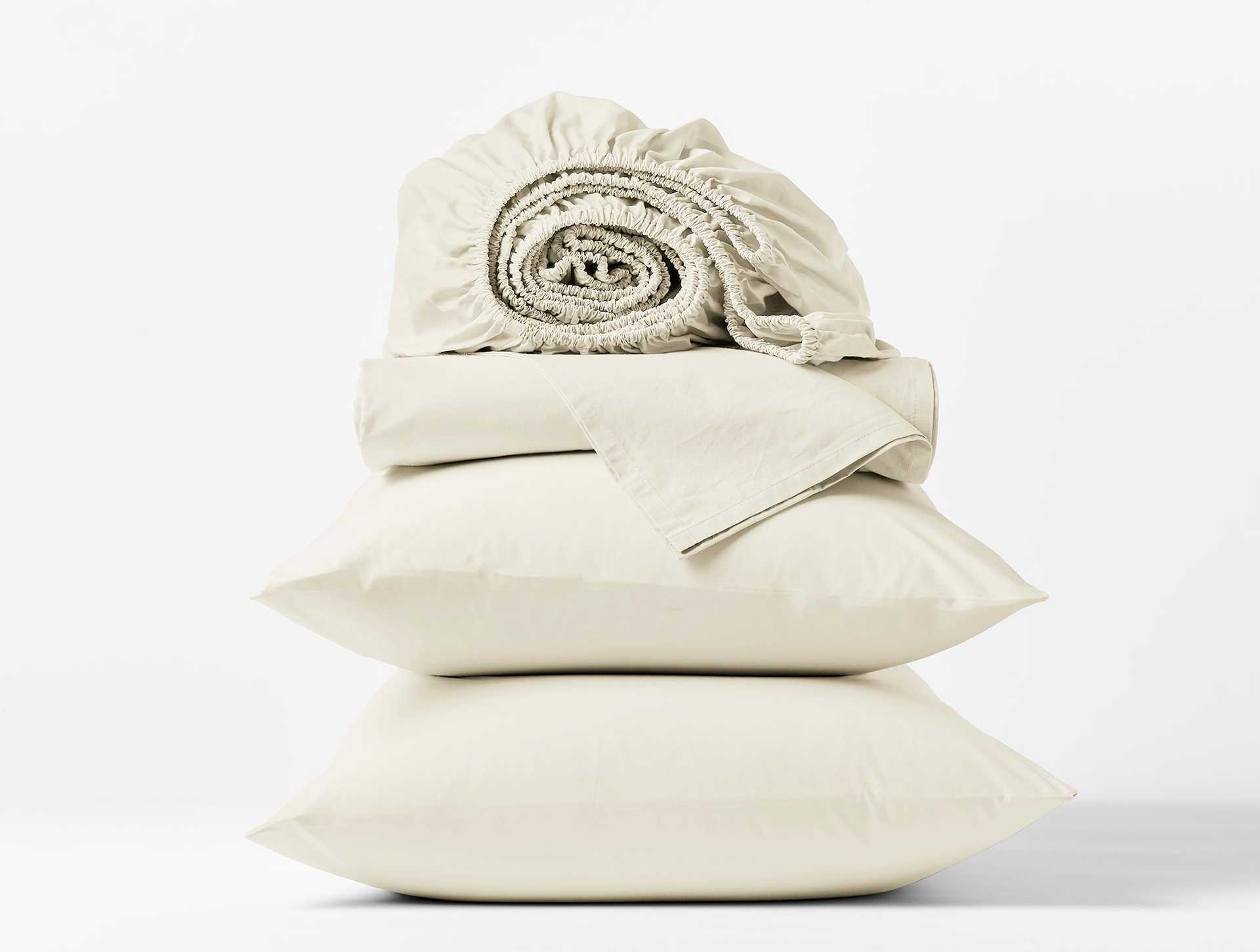
Coyuchi’s organic sheet options make the contrast especially clear. The Refined Organic Percale Sheet Set is described as GOTS-certified organic cotton with a crisp, breathable feel. The Cloud Soft collection, including the Cloud Soft Organic Sateen Sheet Set, offers a smoother, softer drape. These are not competing ideas of luxury so much as two different ways to shape the atmosphere of a bed.
What percale means
Percale is a closely balanced plain weave. In practical terms, the threads cross over and under one another in a simple, regular pattern. That construction gives percale its characteristic matte appearance and crisp hand. It is often compared to a well-laundered cotton shirt: clean, light, and composed rather than glossy or plush.
The first impression can be pleasantly crisp, especially if you are accustomed to brushed or very soft bedding. Percale tends to feel airy and cool against the skin, making it a natural choice for people who sleep warm, prefer a lighter cover, or enjoy the sensation of fresh sheets. Its matte finish also has an understated look, with a relaxed polish that suits both minimal bedrooms and more layered, collected interiors.
With regular laundering, percale generally softens while retaining much of its crisp character. That evolution is part of its appeal: the fabric can become more comfortable over time without losing the fresh, breathable quality that defines it. Individual results vary according to the cotton, yarn, finishing, laundry habits, and personal expectations, so “crisp” should be understood as a characteristic rather than a promise that sheets will feel stiff.
The Coyuchi Refined Organic Percale set is made from 100% GOTS-certified organic cotton, grown and woven in India. Product details note a 7-inch hem on the flat sheet and pillowcases, a 15-inch-deep pocket on the fitted sheet, and a 100% plant-based softener. It is supplied with a matching organic fabric bag. Those construction details are useful beyond aesthetics: a fitted sheet’s pocket depth, in particular, should be checked against the combined height of your mattress and any topper.
What sateen means
Sateen is woven to bring more yarns across the fabric’s surface than a basic plain weave. That structure creates a smoother face and a more fluid drape, often with a subtle sheen. Cotton sateen is not satin: satin commonly refers to a weave associated with filament fibers such as silk or synthetics, while sateen is the cotton interpretation of a smooth-faced weave.
On the bed, sateen usually feels softer and more supple from the outset than percale. It has a gentle weight and a surface that glides against the skin, making it appealing if you like bedding to feel cozy without turning to brushed flannel. The drape can make a bed look relaxed and softly finished, especially when the top sheet and duvet are folded back rather than pulled into sharply defined lines.
A smoother surface and more substantial hand do not automatically make sateen too warm. Sleep temperature depends on the whole setting: the room, duvet fill, mattress, sleepwear, and individual comfort. Still, shoppers who strongly prefer the coolest possible sensation may gravitate toward percale, while those who value softness and a touch of warmth may find sateen more welcoming. If you tend to change your bedding seasonally, sateen can also be a pleasing option in cooler months, while remaining usable year-round according to your layering choices.
Coyuchi’s Cloud Soft Organic Sateen sheets are made from 100% organic cotton grown and woven in India. Product information describes a proprietary spinning and weaving process and a miDori bioSoft finish, a USDA-certified bio-based softener. The line is designed for a smooth, substantial feel with a breathable quality and wrinkle-resistant finish. Specific certifications can vary by item, so check the product details for the exact sheet or set you are considering.
Percale vs. sateen at a glance
| Consideration | Organic percale | Organic sateen |
|---|---|---|
| Typical feel | Crisp, matte, and light | Smooth, soft, and gently draped |
| Surface | More tailored and airy | Silkier to the touch, often with a subtle sheen |
| Often suits | Warm sleepers and fans of a fresh, cool feel | Those who prefer softness, a fuller hand, and a cozy bed |
| Style impression | Relaxed, crisp, and understated | Softly polished and fluid |
| Consider when shopping | Fitted-sheet pocket depth and your preferred degree of crispness | Finishing details, care instructions, and your warmth preference |
These are broad tendencies, not rigid rules. Cotton quality, yarn construction, finishing, laundering, and the sleeper’s own sensitivity all influence the final feel. If possible, judge fabric by its description and construction, not by weave name alone.
Start with the way you sleep
The most useful question is not which weave is universally better, but which one makes your bed feel right. Consider what you notice when you get into bed and what bothers you through the night. If you often kick off covers or wake feeling overheated, the breathable, crisp character associated with percale may be a good starting point. If you like a smoother surface and appreciate a little more substance, sateen may feel more naturally comforting.
- Choose percale if you love a cool, fresh surface. Its airy, crisp feel is particularly appealing to people who want bedding to feel light and unfussy.
- Consider sateen if softness is your first priority. Its smooth hand and drape offer an inviting alternative to a crisp, shirt-like finish.
- Think about your room and bedding layers. A thick duvet, a warm room, or insulating sleepwear may affect comfort more than the sheet weave alone.
- Be honest about your texture preferences. Some sleepers adore the clean resistance of crisp cotton; others would rather sink into a smoother, more yielding surface.
A shared bed may call for compromise. If one person prefers cool percale and the other wants sateen softness, consider whether separate blankets, different pillowcases, or a reversible bedding arrangement could make the room more comfortable for both. The sheet is only one part of the sleep environment, and small adjustments can make a meaningful difference.
Organic cotton and the meaning of a label
“Organic” is a meaningful starting point, but it is not a complete description of a finished textile. Organic cotton refers to the fiber’s agricultural standard; the yarn must then be spun, woven, dyed or finished, sewn, and brought to market. For shoppers, a third-party certification can help make standards more legible by assessing defined parts of a product’s chain, depending on the certification and its scope.
The Coyuchi percale set is listed as GOTS-certified, and the brand’s product information identifies several Cloud Soft sateen items as GOTS-certified, with Fair Trade certification listed for some products. GOTS—the Global Organic Textile Standard—covers defined environmental and social criteria for certified textile processing and labeling. A product-level certification should not be assumed from a collection name, however; confirm the specific listing, label, and certification details for the item you plan to buy.
It is also worth separating fiber claims from performance claims. Organic certification does not, by itself, establish that sheets will be cooler, softer, more durable, or better for a particular sleeper. Those qualities depend on construction and use. A practical purchase combines the values you care about with the tactile qualities, dimensions, and care requirements that suit your home.
For shoppers who want more context, look for transparent details about fiber content, country of origin, weave, finishing, and care. In the Refined Organic Percale set, the product description notes that the factory recycles 90% of its wastewater. Such information can add useful context, but it should be read as a specific production detail rather than a blanket claim about every item in a range.
Thread count, feel, and what numbers can’t tell you
Thread count has long been used as shorthand for sheet quality, but it cannot tell the entire story. It describes the number of threads in a defined area of fabric, yet counting practices and yarn characteristics can complicate comparisons. Fiber quality, yarn structure, weave, and finishing all affect how a sheet feels and performs. A higher number is not automatically a better choice, nor does it replace the more personal question of whether you prefer percale or sateen.
Instead of chasing a single number, read the product information as a whole. Is the fabric 100% cotton? Is the weave identified? Are dimensions and fitted-sheet pocket depth provided? Are certifications specified for the exact product? Are care instructions clear? These are practical questions that help you assess whether a set is suited to your mattress, routine, and priorities.
When possible, pay attention to the language used to describe the surface. “Crisp” and “matte” tend to signal a percale-like character, while “smooth,” “drapey,” or “soft” often suggest sateen. Descriptions are not a substitute for handling the fabric, but they can help translate construction into the kind of nightly experience you can expect.
Care that keeps the feel in balance
Thoughtful laundering can help organic cotton sheets stay comfortable over repeated use. Always follow the care instructions on the specific product, since finishing and construction can differ even within a category. Coyuchi’s Refined Organic Percale and many Cloud Soft sateen items list cold washing on a gentle cycle and tumble drying on low heat. Some sateen product details recommend removing sheets promptly from the dryer and note that a warm iron may be used if desired.
- Wash sheets before first use if recommended by the product instructions, and avoid overloading the machine.
- Use a gentle cycle and moderate detergent; follow the label for temperature and any restrictions.
- Choose low heat or line drying when suitable, as excessive heat can place unnecessary stress on cotton fibers.
- Remove bedding promptly after drying to limit creasing, especially if you prefer a smoother finish.
- Store fully dry sheets in a clean, ventilated place, ideally with the matching pieces kept together.
Percale’s crispness often settles into a softer, lived-in feel with washing. Sateen’s smoothness also changes through use and laundering, and the finish may evolve over time. Neither transformation should be treated as a flaw: cotton is a natural fiber, and its character is shaped by everyday care. Following the maker’s instructions is the best way to support both comfort and longevity.
Fit is part of the experience
A beautiful sheet that slips off the mattress is not a luxurious one. Before choosing a set, measure the mattress and include any topper or protective layer that adds height. Compare that measurement with the fitted sheet’s pocket depth, and check the dimensions for your mattress size. The Refined Organic Percale set lists a 15-inch-deep fitted pocket, a detail that may be particularly helpful for shoppers with a taller mattress. Confirm the current listing before purchase, since specifications can change.
Set contents deserve the same attention. A sheet set may include a flat sheet, fitted sheet, and pillowcases, but the number and size of pillowcases can vary by bed size and product. If you are replacing one piece rather than outfitting an entire bed, a standalone fitted or flat sheet may be more practical than a full set. For a coordinated look, consider how the sheet color and finish will sit alongside duvet covers, pillowcases, and other bedding already in use.
Aesthetic matters, too
Sheets are the closest layer of a bedroom, but they also set its visual tone. Percale’s matte, crisp surface brings a quiet clarity to a bed. It pairs easily with structured quilts, textured blankets, and casually folded duvets. The look is clean without feeling formal, making it well suited to rooms where natural materials and simple lines do the work.
Sateen lends a softer sense of movement. Its smoother surface catches light differently, while its drape gives the bed a more relaxed, enveloping appearance. It can balance a room built around hard-edged furniture or add a subtle feeling of ease to a restrained palette. Neither weave requires a particular decorating style; the distinction is simply whether you want the bed to look crisp and composed or soft and fluid.
Color, too, affects the impression. Warm neutrals can emphasize the easy, natural character of cotton, while deeper shades create a more cocooning effect. The best choice is the one that works with the existing room and still feels inviting at the end of a long day. A thoughtful bed need not be elaborate; a well-chosen sheet, a comfortable pillow, and a duvet suited to the season can be enough.
How to decide: a simple checklist
If you are still weighing the two, make the decision in this order:
- Name your preferred feel. Is your ideal sheet cool and crisp, or smooth and soft?
- Account for temperature. Think about whether you sleep warm, the climate in your bedroom, and how heavy your duvet is.
- Check your mattress measurements. Confirm the fitted-sheet depth and set dimensions before ordering.
- Read the exact product specifications. Verify fiber content, certification, finish, included pieces, and care guidance.
- Choose for your real routine. A sheet you enjoy using and can care for comfortably is more valuable than one chosen for a specification alone.
This approach keeps the decision grounded in both sensation and substance. Organic cotton may be central to your priorities, but the weave is what helps determine whether the bed feels tailored or softly inviting. Let the label inform the choice; let your habits finish it.
The verdict: crisp calm or soft ease?
For a cooler, crisp, matte feel, Coyuchi’s Refined Organic Percale is the more natural direction. Its GOTS-certified cotton construction, breathable character, plant-based softener, and practical 15-inch fitted-sheet pocket make it a considered option for anyone drawn to a fresh, light bed. For a smoother surface and a more generous drape, the Cloud Soft Organic Sateen collection offers a softer interpretation of organic cotton bedding, with product details noting a miDori bioSoft finish and easy-care guidance on many items.
There is no universal winner between percale and sateen. The distinction is closer to choosing the mood of a room: clear and crisp, or gentle and fluid. Both can be made from organic cotton, both can be comfortable, and both can earn a place in a thoughtful bedding rotation. Begin with how you want the sheets to feel against your skin, then confirm the construction, certification, fit, and care details. The right set is not simply the one with the most impressive description—it is the one that makes getting into bed feel like the best part of the evening.
Frequently asked questions
Are percale sheets cooler than sateen?
Percale is commonly appreciated for a crisp, breathable feel, while sateen is typically smoother and more substantial to the touch. Which feels cooler depends on the sleeper and the full bedding setup, including room temperature, duvet, and sleepwear.
Is sateen the same as satin?
No. Sateen is a weave used with cotton that creates a smooth-faced fabric. Satin generally refers to a different weave and is often associated with silk or synthetic filament fibers. The terms describe related surface effects, not identical materials.
Does organic cotton automatically mean softer sheets?
No. Organic describes how the cotton fiber is produced under applicable standards; softness depends on other factors, including yarn, weave, finishing, and laundering. Percale and sateen made from organic cotton can feel distinctly different.
How do I choose between the Coyuchi options?
Choose the Refined Organic Percale set if you favor a crisp, airy, matte feel. Consider Cloud Soft Organic Sateen if you prefer a smooth, soft surface with a more fluid drape. In either case, review the specific item’s dimensions, certification details, included pieces, and care instructions before buying.